In California, a truck accident claim must generally be filed within 2 years of the crash, and the state follows pure comparative negligence. Federal FMCSA regulations govern the carrier's conduct, while California law governs the injury claim itself — which is why the state your crash happened in changes what your case is worth and how long you have.
How fault works in California
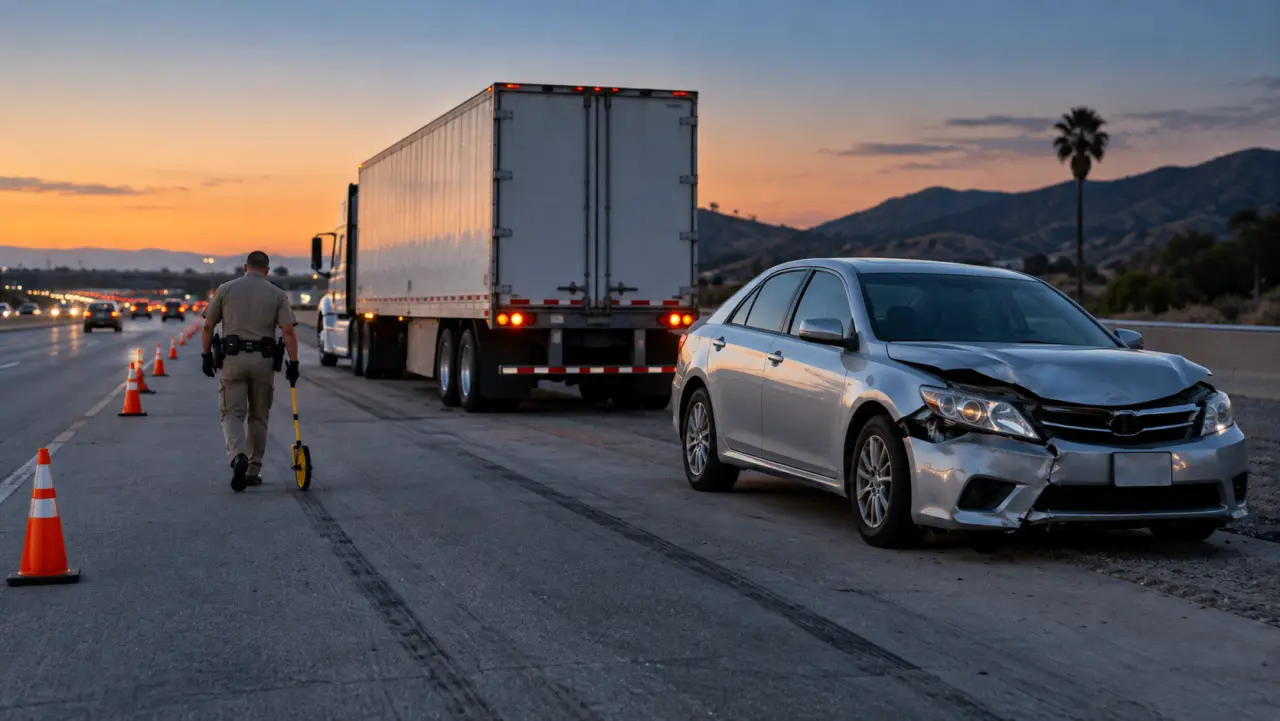
California is a pure comparative state. Even a claimant found 90% at fault may recover the remaining 10% of their damages — there is no percentage that bars recovery outright.
This matters more than most people expect. The trucking company's insurer is not only arguing about how much you were hurt — it is arguing about what share of the crash was your responsibility, because every percentage point shifted onto you reduces what it pays. In California, that pressure is constant throughout the claim. See who can be held liable.
Where truck crashes happen in California
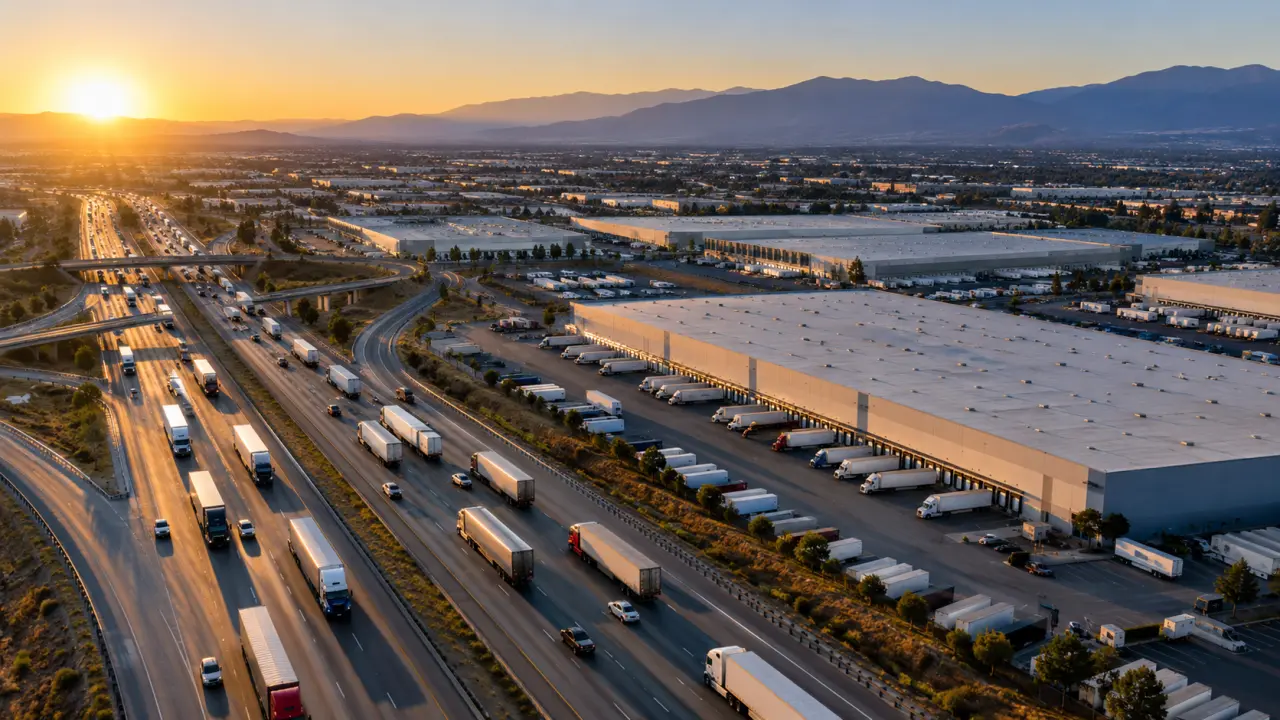
The Ports of Los Angeles and Long Beach move a substantial share of all containerized imports into the United States, and the drayage traffic feeding out of them concentrates heavy truck volume across the Inland Empire — San Bernardino, Riverside, Fontana, Ontario, and Rancho Cucamonga — where warehouse and distribution density is among the highest in the country.
The corridors that carry the most commercial truck traffic:
- I-5 (the state's north–south freight spine)
- I-10 and I-15 through the Inland Empire
- SR-99 through the Central Valley
- I-710 (the Long Beach drayage corridor)
- I-40 and I-80 for interstate long-haul
Crashes on these routes tend to involve interstate carriers, which means the federal safety regulations — hours-of-service limits, maintenance duties, drug and alcohol testing — apply alongside California negligence law.
California-specific issues worth knowing

Before you talk to an adjuster
- California does not cap compensatory damages in ordinary personal injury cases.
- Claims against a California public entity require a government claim, generally within six months of the incident under the Government Claims Act.
- The California Highway Patrol handles most freeway collision investigations; the traffic collision report is a core early document.
Federal rules do not change at the state line
Whatever state you were injured in, a carrier operating in interstate commerce answers to the same federal standard: at least $750,000 in liability coverage, hours-of-service limits under 49 CFR Part 395, and a six-month retention floor on driver duty records. What changes from state to state is the deadline, the fault rule, and any damages limits.
That combination is why the same crash can be worth substantially different amounts in two neighboring states — and why preserving the truck's data matters equally everywhere.
Areas served in California

Attorneys in the referral network handle commercial truck cases throughout California, including Los Angeles, San Bernardino, Rancho Cucamonga, Riverside, Fresno, Sacramento, Oakland, and San Diego. A free case review routes your request to an attorney licensed in the state where your crash happened.
Other states
See all states → or check filing deadlines for all 50 states.
Sources
- Large Truck and Bus Crash Facts — Federal Motor Carrier Safety Administration
- SAFER Company Snapshot — carrier safety records — Federal Motor Carrier Safety Administration
- Fatality Analysis Reporting System (FARS) — National Highway Traffic Safety Administration
Federal regulations and crash statistics are updated periodically. Figures cited on this page reflect the referenced publications at the time of writing; check the source for the current edition.