Understanding why a big rig crash happened is the foundation of every truck accident claim. The cause determines who can be held liable — the driver, the trucking company, a maintenance contractor, or a manufacturer — and what evidence a big rig truck accident lawyer needs to preserve.
Federal crash data from the FMCSA and NHTSA consistently shows that most serious truck accidents trace back to a handful of preventable failures. The pages below break down each major cause, the federal rules involved, and how it affects liability.
The ten most common causes
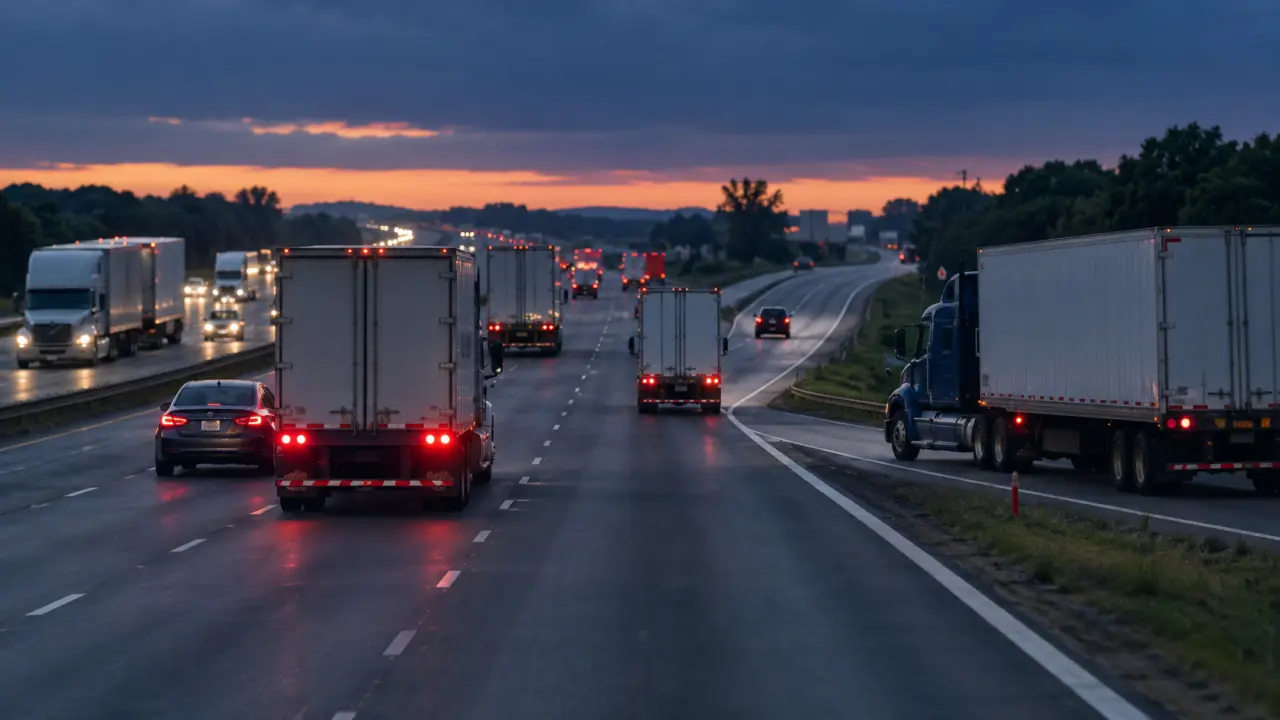
- Driver fatigue — hours-of-service violations and drowsy driving remain a leading factor in fatal large-truck crashes.
- Jackknife accidents — the trailer swings out past the cab, often sweeping across multiple lanes of traffic.
- Underride accidents — a passenger vehicle slides beneath the trailer; among the deadliest crash types on the road.
- Rollover accidents — a high center of gravity and speed on curves can tip a loaded trailer.
- Blind spot (No-Zone) accidents — large blind spots on all four sides hide vehicles during lane changes.
- Wide turn accidents — the "squeeze play" traps vehicles beside a turning trailer.
- Cargo shift & overloading — unsecured or unbalanced freight destabilizes the trailer mid-drive.
- Impaired driving (DUI) — commercial drivers face a stricter 0.04% BAC limit and mandatory testing.
- Brake failure — skipped inspections and deferred maintenance frequently point to carrier negligence.
- Tire blowouts — worn, defective, or under-inflated tires on an 80,000-pound rig can cause total loss of control.
Why the cause of the crash matters legally
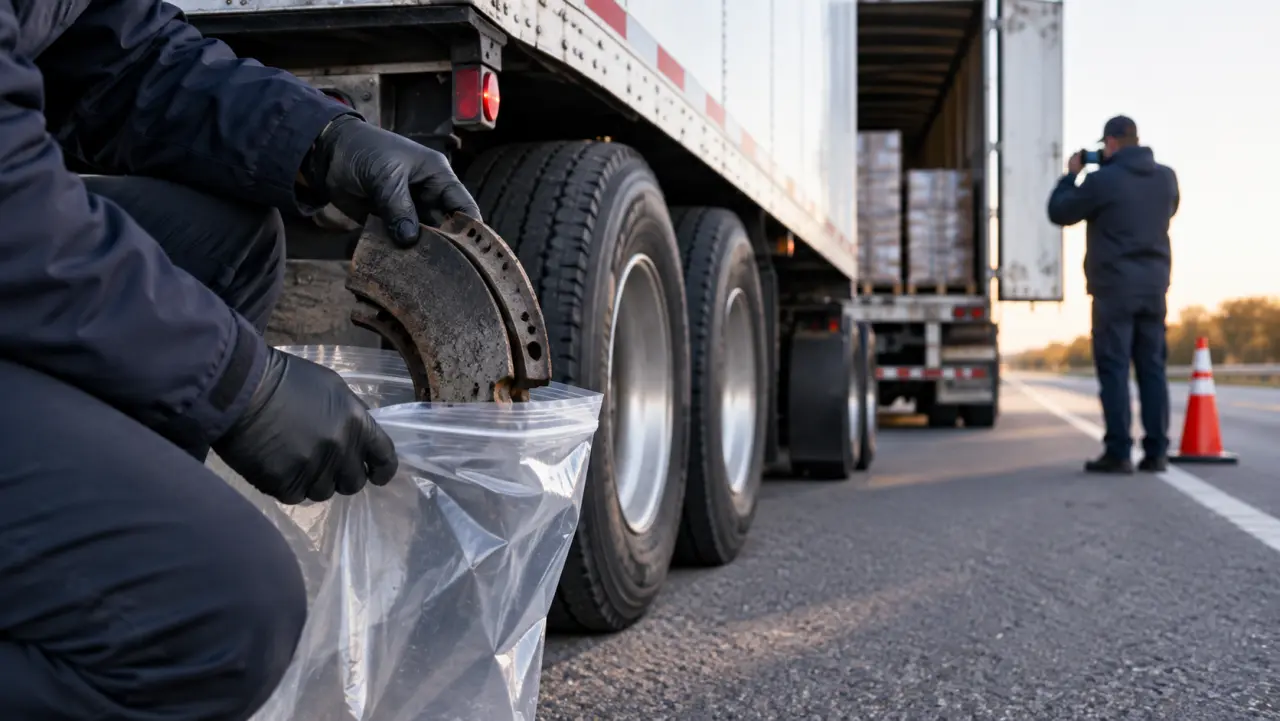
In an ordinary car accident, the question is usually which driver was careless. In a commercial trucking case, the cause opens the door to different defendants and different evidence:
| Cause | Likely liable parties | Key evidence |
|---|---|---|
| Driver fatigue | Driver, motor carrier | ELD/HOS logs, dispatch records |
| Jackknife | Driver, carrier, cargo loader | EDR data, load documentation |
| Underride | Driver, carrier, trailer manufacturer | Guard condition, conspicuity tape, lighting |
| Rollover | Driver, carrier, loader | EDR speed/steering data, load documents |
| Blind spot / No-Zone | Driver, carrier | Dashcam/trailer camera footage, mirror equipment records |
| Wide turn | Driver, carrier | Intersection camera footage, witness statements |
| Cargo shift | Loader, carrier, driver | Bill of lading, loading dock records |
| Impaired driving | Driver, carrier | Toxicology results, Clearinghouse records |
| Brake failure | Carrier, maintenance contractor | Inspection & maintenance records |
| Tire blowout | Carrier, tire manufacturer, maintenance shop | Tire remains, service history |
Much of this evidence is controlled by the trucking company and can be lost or overwritten within weeks. That's why the first step in a serious case is a preservation (spoliation) letter — something an attorney sends immediately. Learn more about FMCSA regulations and truck accident evidence, who can be held liable, and common truck accident injuries.