FMCSA regulations do two things in a truck accident claim: they set the standard of care a jury measures the carrier against, and they generate the paper trail that proves violations. Hours-of-service limits, maintenance duties, drug testing, and cargo securement each produce records — ELD logs, inspection reports, black box data — that can be subpoenaed if preserved in time.
The Federal Motor Carrier Safety Administration (FMCSA) regulates virtually every aspect of interstate trucking — who can drive, how long they can drive, how trucks must be maintained, and how cargo must be secured. For an injured person, these regulations do two things: they set the standard of care a jury measures the trucking company against, and they generate the paper trail that proves violations.
The regulations that matter most in injury claims

| Regulation | What it requires | How violations appear in crashes |
|---|---|---|
| 49 CFR 395 (Hours of Service) | 11-hr driving / 14-hr window / 30-min break / 60-70 hr weekly limits, ELD recording | Fatigue crashes, falsified logs |
| 49 CFR 396 (Maintenance) | Systematic inspection, repair, DVIRs, annual inspections | Brake failure, tire blowouts |
| 49 CFR 393 (Parts & Cargo) | Brake standards, lighting, rear impact guards, cargo securement | Underride, cargo-shift and spill crashes |
| 49 CFR 382 (Drug & Alcohol) | Pre-employment, random, and post-accident testing; Clearinghouse checks | Impairment cases; carriers hiring drivers with prior violations |
| 49 CFR 391 (Driver Qualification) | CDL, medical certification, driving-history checks, qualification files | Negligent hiring claims against the carrier |
| 49 CFR 387 (Financial Responsibility) | Minimum liability insurance ($750K–$5M by cargo type) | Determines the coverage available for your compensation |
The evidence a lawyer moves to preserve immediately
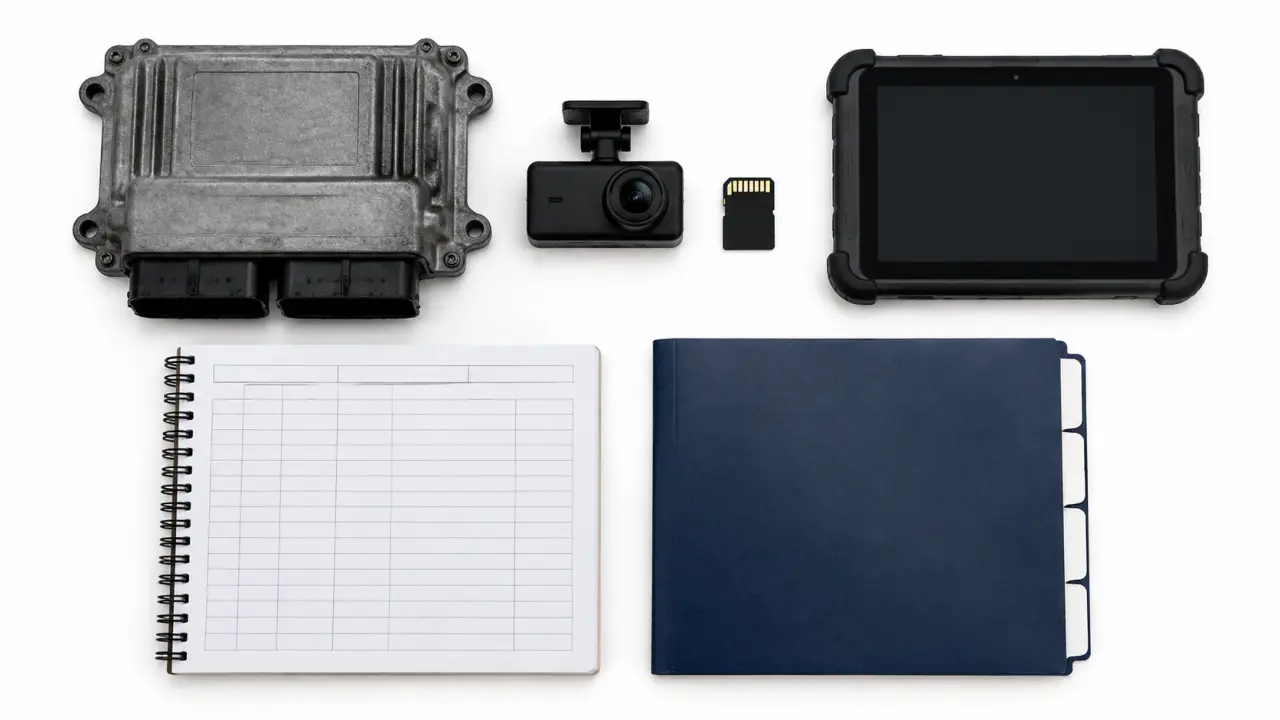
The black box (Event Data Recorder)
Modern commercial trucks record speed, throttle, brake application, and sometimes steering input for the seconds surrounding a hard-brake or crash event. Engine control modules also store fault codes and driving-history data. This data can be overwritten in weeks of normal operation — or lost entirely if the truck is repaired or salvaged.
Electronic logging device (ELD) records
ELDs record driving time automatically, including log edits. Carriers must retain records for six months — after that, they can legally destroy them. Cross-referencing ELD data with fuel receipts, tolls, and GPS exposes falsification.
The carrier's own files
- Driver qualification file (hiring, license history, medical cert)
- Drug and alcohol testing records, including post-accident tests
- Maintenance and inspection records, DVIRs
- Dispatch records, load documents, bills of lading
- The carrier's FMCSA safety score history (SMS/CSA data — publicly searchable)
The spoliation letter
A preservation-of-evidence ("spoliation") letter puts the carrier and its insurer on formal notice that litigation is anticipated and that destroying the truck, EDR data, logs, or files will expose them to court sanctions. Sending it within days — not months — is one of the most valuable things a big rig truck accident lawyer does.
Violations change the value of a case

A documented federal violation shifts a case from "he said, she said" to negligence per se in many states — the violation itself establishes the breach of duty. It also opens the door to punitive damages when the record shows a pattern. That's why the same crash can be worth dramatically more with the right evidence preserved. See who can be held liable and what compensation covers — or protect the evidence in your case now with a free case review.