Driver fatigue causes big rig crashes when drivers exceed federal hours-of-service limits or drive while impaired by exhaustion. FMCSA rules cap driving at 11 hours after 10 hours off duty, within a 14-hour on-duty window. Electronic logging devices record compliance automatically, creating a digital trail that can prove violations after a crash.
Commercial truck drivers work long shifts under tight delivery deadlines, and fatigue has been recognized for decades — in FMCSA research and NTSB investigations — as a major factor in serious large-truck crashes. A drowsy driver reacts more slowly, drifts between lanes, and can experience "micro-sleeps" of several seconds at highway speed. In an 80,000-pound big rig, a few seconds of inattention is catastrophic.
Federal hours-of-service (HOS) rules
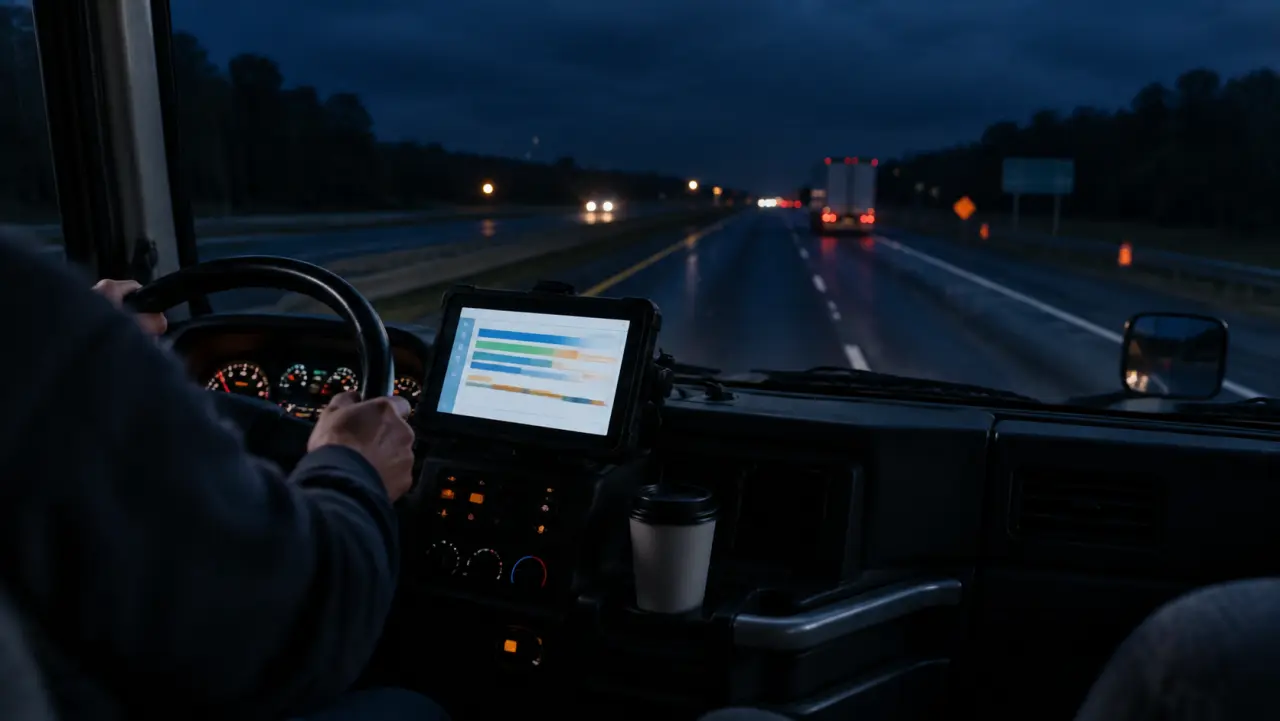
The Federal Motor Carrier Safety Administration limits how long truck drivers can be behind the wheel. The core property-carrier rules (49 CFR Part 395) include:
- 11-hour driving limit after 10 consecutive hours off duty
- 14-hour on-duty window — driving is not permitted beyond the 14th hour after coming on duty
- 30-minute break required after 8 cumulative hours of driving
- 60/70-hour limit over 7/8 consecutive days, reset by 34+ hours off duty
Since the federal ELD mandate, most commercial trucks must record driving time automatically with an electronic logging device. That creates a digital trail a big rig truck accident lawyer can subpoena and compare against fuel receipts, toll records, GPS pings, and dispatch communications to expose falsified logs.
How fatigue is proven after a crash

- ELD / hours-of-service logs and edit histories
- The truck's event data recorder (black box) — speed, braking, and steering inputs before impact
- Dispatch and delivery schedules showing unrealistic deadlines
- Cell phone records and receipts placing the driver on duty longer than logged
- Witness testimony of drifting, weaving, or delayed braking
Who is liable for a fatigue crash?

The driver is rarely the only responsible party. Trucking companies have been found liable for pressuring drivers to break HOS limits, setting delivery windows that can't legally be met, ignoring log falsification, or paying per-mile structures that reward pushing through exhaustion. When a carrier's scheduling practices caused the violation, the claim reaches the company — and its much larger insurance policy. See who can be held liable after a big rig accident.
Why timing matters

ELD data is only required to be retained for a limited period, and carriers routinely overwrite or dispose of records once retention windows lapse. A preservation letter sent early freezes this evidence. If fatigue may have played a role in your crash, get a free case review before the records disappear.
Related causes
- Jackknife accidents — fatigue-delayed braking is a common trigger
- Brake failure
- Tire blowouts
Sources
- 49 CFR § 395.3 — Maximum driving time for property-carrying vehicles — Electronic Code of Federal Regulations
- 49 CFR § 395.8 — Driver's record of duty status — Electronic Code of Federal Regulations
- Electronic Logging Devices (ELD) rule and technical specifications — Federal Motor Carrier Safety Administration
- 49 CFR Part 391 — Qualifications of drivers — Electronic Code of Federal Regulations
- Large Truck and Bus Crash Facts — Federal Motor Carrier Safety Administration
- Safety Measurement System — carrier safety records by BASIC — FMCSA Safety Measurement System
Federal regulations and crash statistics are updated periodically. Figures cited on this page reflect the referenced publications at the time of writing; check the source for the current edition.