AI Search Overview
A truck tire blowout crash is usually a maintenance failure, not bad luck. The motor carrier is normally liable for running underinflated, worn, or overloaded tires, and a repair shop, retreader, or tire manufacturer can share fault. Injured drivers and passengers can claim medical costs, lost income, and pain and suffering.
- Most big rig blowouts trace to underinflation, worn tread, overloading, or bad retread work — not chance.
- Federal rule 49 CFR 393.75 requires 4/32 inch of tread on steer tires and 2/32 inch on all others.
- Tires were the second most-cited vehicle out-of-service violation in CVSA's 2025 Roadcheck.
- The failed tire is the key evidence; it must be preserved before the truck is repaired.
Hurt by a truck tire blowout? Do I Have a Case?
Answer a few questions in our free 60-second check and we'll connect you with an independent truck accident attorney who handles tire and maintenance-failure claims.
The truck's black box and driver logs can be overwritten within weeks — the sooner a preservation letter goes out, the stronger your claim.
Do I Have a Case? — Free 60-Second CheckCall or Text: (909) 353-1789 · Text preferred · Free
You've seen the evidence on every interstate: shredded strips of truck tire — "road gators" — littering the shoulder. Each one represents a commercial tire that came apart at speed. When a steer tire blows on a loaded big rig, the driver can lose directional control instantly; when a drive or trailer tire fails, the flying debris alone can cause secondary crashes. Blowouts contribute to rollovers, lane-departure collisions, and jackknife accidents. This guide explains why they happen, which federal tire rules apply, and who a truck tire blowout accident lawyer would hold responsible.
What causes commercial tire blowouts?
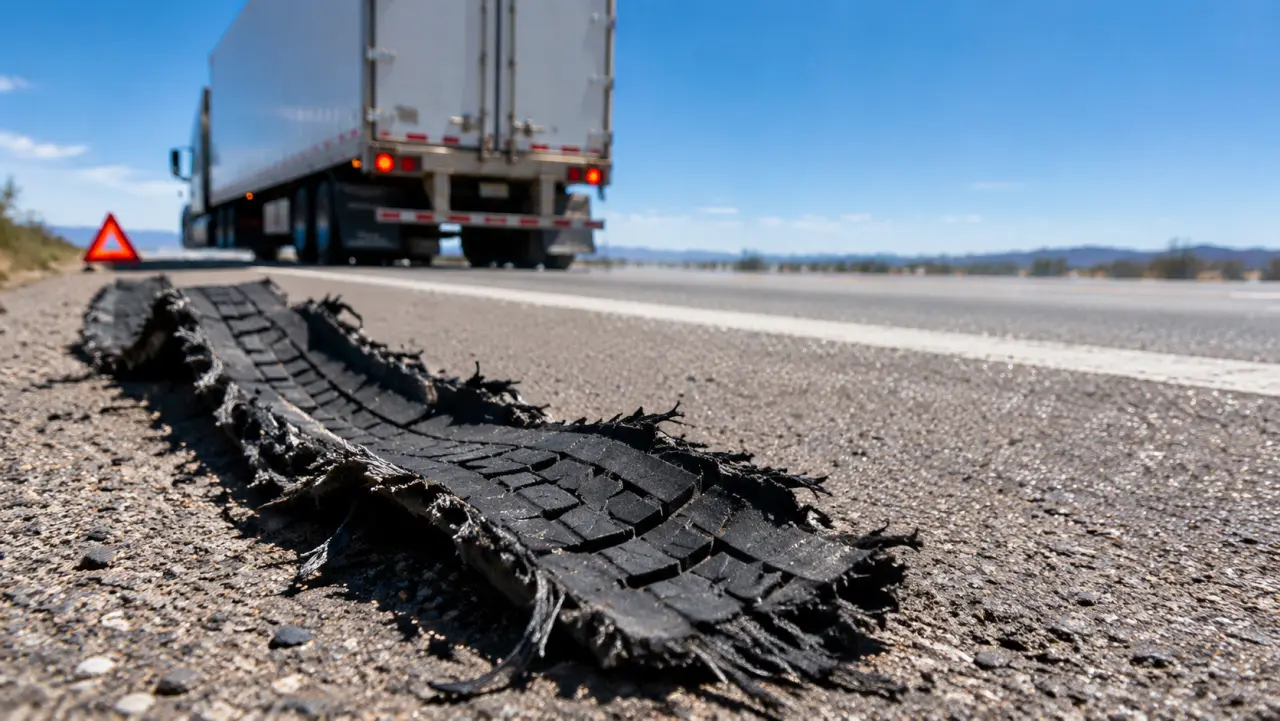
- Under-inflation — the leading cause. An under-inflated tire flexes, overheats, and delaminates. Pressure checks are part of required pre-trip inspections.
- Worn tread past legal limits. FMCSA regulations set minimum tread depths (4/32" on steer tires, 2/32" elsewhere). Running tires past those limits is a violation, not bad luck.
- Overloading — cargo beyond the tire's load rating generates heat and stress. Weigh station and bill-of-lading records expose it.
- Heat and sustained speed — long hauls on hot pavement at high speed push heat into a casing that is already underinflated or overloaded, which is when tread separation happens.
- Mismatched or damaged duals — when one tire in a dual pair is low, its partner carries extra load and can fail.
- Retread failures — retreaded tires are legal and common, but defective retreading work can cause tread separation.
- Manufacturing defects — supporting a product liability claim against the tire maker, often tied to a recall.
- Road hazards combined with worn casings — a healthy tire survives what a neglected one won't.
Truck tire violations by the numbers
No federal dataset reliably counts every blowout crash, but roadside inspection data shows how often trucks run on bad tires:
- During the Commercial Vehicle Safety Alliance's 2025 International Roadcheck, inspectors recorded 2,899 tire-related out-of-service violations — 21.4% of all vehicle out-of-service violations, second only to brake systems. Tires were that year's vehicle focus area.
- Across 2025 roadside inspections, the federal tire rule (49 CFR 393.75 — tread, inflation, and load limits) was the second most-cited vehicle violation, with 311,932 violations reported in J.J. Keller's analysis of FMCSA data, about 27% of which put the truck out of service.
An out-of-service violation means the truck was not legal to drive until the defect was fixed. Those violations also show up on a carrier's public safety record, which is one of the first places an attorney looks — see our guide to FMCSA trucking regulations.
Federal tire rules carriers must follow
| Rule | What it requires | Evidence it creates |
|---|---|---|
| 49 CFR 393.75 | 4/32" tread on steer tires, 2/32" on others; no exposed ply or belt, tread or sidewall separation, flat, or audible leak; tires rated for the load | Measured tread depth and condition of the failed tire |
| 49 CFR 392.7 | Driver must confirm tires are in good working order before driving | Pre-trip inspection practice, driver testimony |
| 49 CFR 396.11 | Written driver vehicle inspection reports listing defects, and proof of repair | DVIRs showing reported tire problems |
| 49 CFR Part 396 | Systematic inspection, repair, and maintenance, plus annual inspections and records | Maintenance files, work orders, annual inspection reports |
Steer, drive, and trailer tire blowouts crash differently
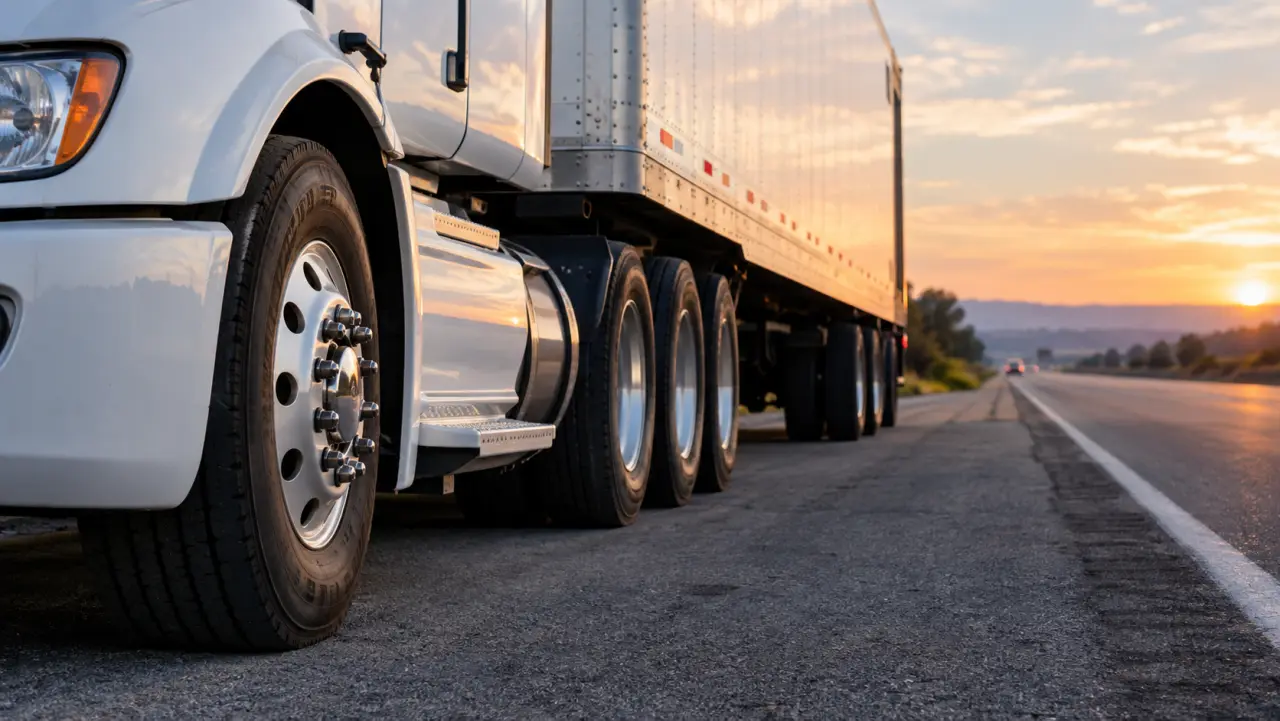
- Steer (front) tire — the most dangerous failure. The truck pulls hard toward the blown side and can cross into oncoming traffic or the shoulder. That is why steer tires carry the stricter 4/32" tread minimum, and federal rules bar regrooved tires on the front wheels of most heavy trucks.
- Drive tires — usually leave the truck controllable but throw heavy tread strips into following traffic and can damage air and brake lines.
- Trailer tires — often go unnoticed by the driver, shed debris, and on a loaded trailer can contribute to sway or rollover crashes.
If you were hit by tread rather than the truck itself, read our guide to truck tire debris accidents, which covers what happens when the truck drives away.
Blowouts are treated as maintenance failures
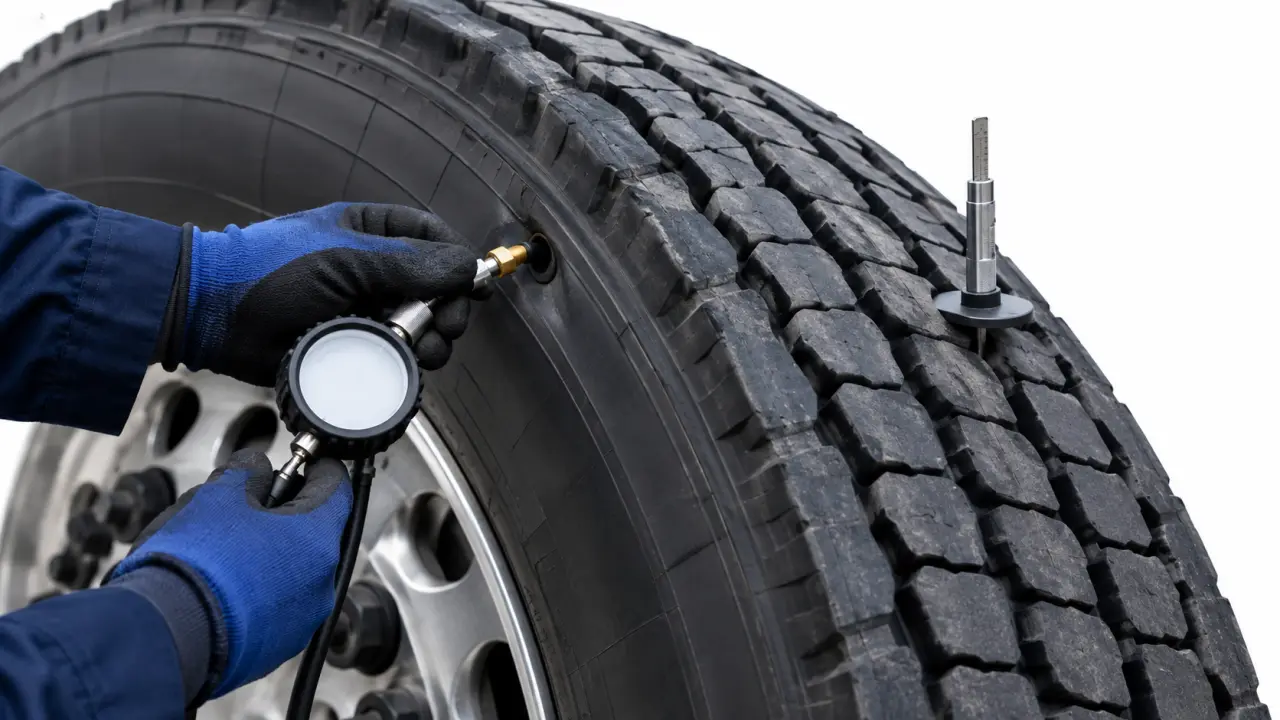
Like brake failure, a tire blowout on a commercial vehicle usually traces to skipped inspections or deferred replacement. Carriers must document tire condition in driver vehicle inspection reports and maintenance files. When those records show slow leaks reported and ignored, or tires worn below limits at the last inspection, the "unavoidable accident" defense collapses.
Who can be held liable for a truck tire blowout?
| Party | Typical theory | Key evidence |
|---|---|---|
| Trucking company (motor carrier) | Negligent maintenance and inspection; responsible for its driver | Maintenance files, DVIRs, safety record |
| Truck driver | Skipped pre-trip tire checks, ignored a known leak, speeding | Inspection reports, ELD and telematics data |
| Tire or retread manufacturer | Product liability for a defective tire or casing | Forensic tire exam, DOT tire code, recall history |
| Tire service shop | Improper mounting, repair, or inflation | Work orders and invoices |
| Shipper or loader | Overloading beyond the tires' rated capacity | Bills of lading, weight tickets |
| Public road agency | Failure to repair a hazard or clear known debris | Maintenance logs, prior complaints |
Because several parties can share fault, a claim may reach more than one insurance policy — see how truck insurance policy limits work, and our overview of who can be sued after a big rig crash.
Find out who is liable for your blowout crash
Take the free 60-second check. If your claim qualifies, an independent attorney can move to preserve the failed tire and maintenance records before they disappear.
The truck's black box and driver logs can be overwritten within weeks — the sooner a preservation letter goes out, the stronger your claim.
Do I Have a Case? — Free 60-Second CheckCall or Text: (909) 353-1789 · Text preferred · Free
What to do after a truck tire blowout crash
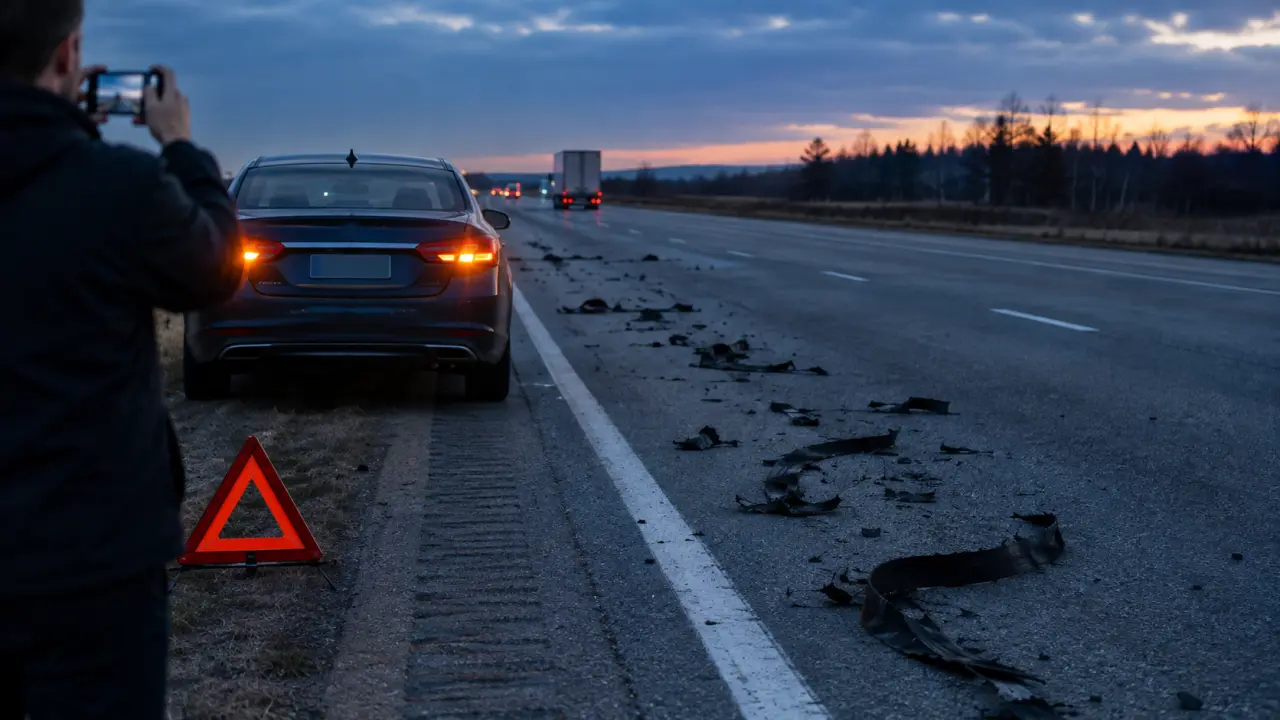
- Get to safety and call 911; accept medical evaluation even if you feel fine.
- Photograph the tire debris, the truck, its wheels, and the scene.
- Write down the carrier name and USDOT number from the cab door.
- Get the police report number and witness contact details.
- Do not give a recorded statement to the trucking company's insurer.
- Keep every medical record, bill, and proof of missed work.
- Talk to a lawyer quickly so a preservation letter goes out for the tire and records.
The full step-by-step list is in what to do after a truck accident.
Evidence that proves a tire blowout claim
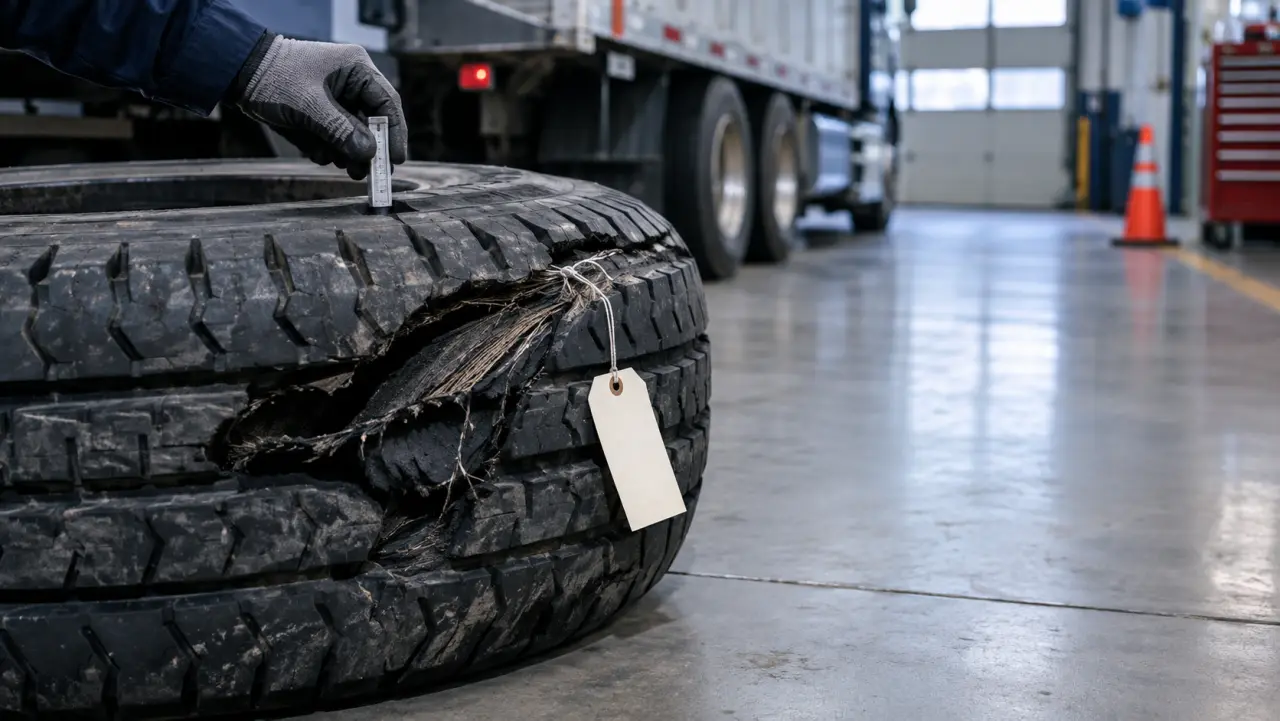
- The failed tire and all tread fragments, kept unaltered
- The tire's DOT identification code (maker, plant, and week of manufacture)
- Retread records and the casing's service history
- Driver vehicle inspection reports and maintenance work orders
- Tire pressure monitoring, telematics, and engine control module data
- Weight tickets and bills of lading showing the load
- Prior tire violations on the carrier's FMCSA safety record
- Any NHTSA recall covering the tire
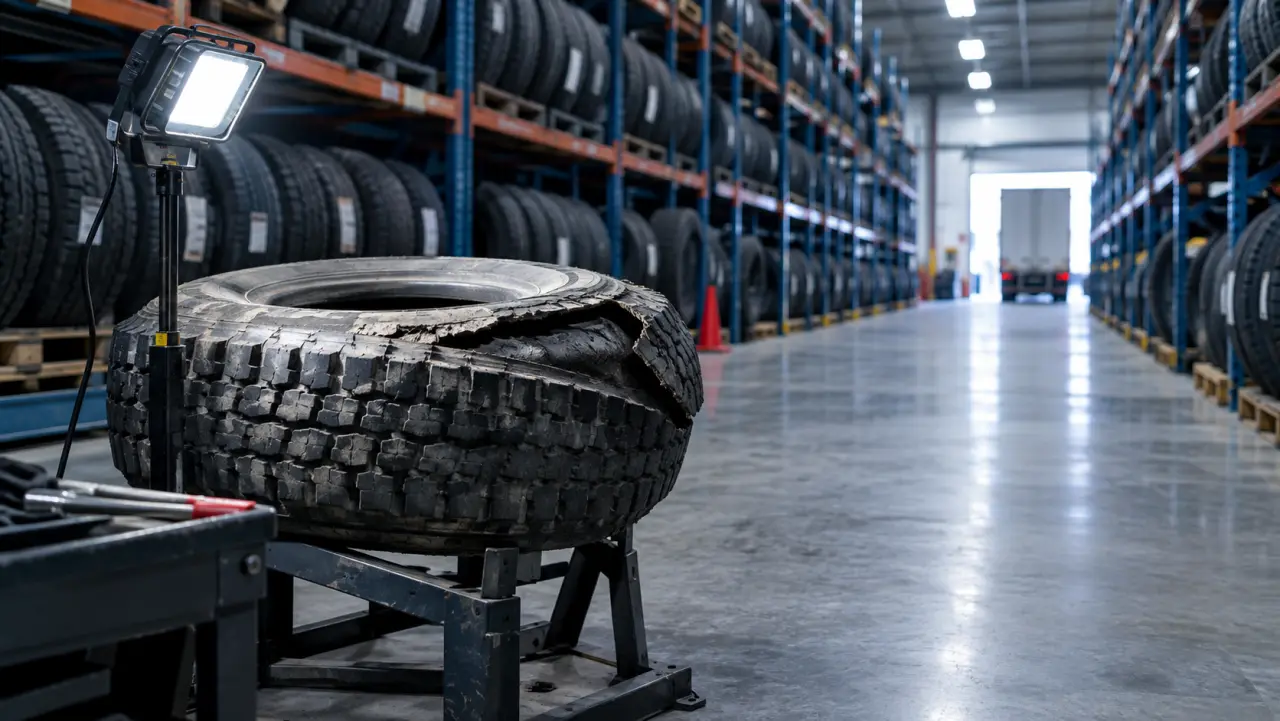
Forensic tire experts can distinguish a manufacturing defect from heat damage caused by neglect or from a road hazard — but only if the tire is saved. Trucking companies routinely clear the scene and replace tires within hours.
What compensation can a blowout victim claim?
A truck tire blowout claim seeks the same categories of damages as any serious truck crash: medical bills and future care, lost wages and earning capacity, vehicle damage, and pain and suffering. Blowout crashes at highway speed often cause traumatic brain injuries and other catastrophic harm, and families may bring a wrongful death claim. See what compensation may cover and how big rig accident settlements are valued. We do not quote case values; every claim depends on its own injuries and evidence.
Do you need a truck tire blowout accident lawyer?
Tire blowout claims are more complex than most crashes. They often involve several defendants who blame each other, product liability rules, and expert tire forensics. The evidence is controlled by the trucking company and its vendors, and only formal legal demands reliably preserve it. Deadlines also apply: in California, for example, most injury claims must be filed within two years, and a claim against a public agency generally requires a written government claim within six months. Check your state's truck accident statute of limitations, and if your crash happened in California, see our California truck accident lawyer guide.
We are a free referral service, not a law firm. Use our Do I Have a Case? — Free 60-Second Check to see whether an independent attorney in our network can review your tire blowout claim.
Sources
- 49 CFR § 393.75 — Tires — Electronic Code of Federal Regulations
- 49 CFR § 392.7 — Equipment, inspection and use — Electronic Code of Federal Regulations
- 49 CFR § 396.11 — Driver vehicle inspection report(s) — Electronic Code of Federal Regulations
- 49 CFR Part 396 — Inspection, repair, and maintenance — Electronic Code of Federal Regulations
- CVSA Releases 2025 International Roadcheck Results — Commercial Vehicle Safety Alliance
- Top 20 commercial vehicle violations of 2025 — J.J. Keller Compliance Network
- Recalls, defect investigations, and safety issues — National Highway Traffic Safety Administration
- Safety Measurement System — carrier safety records by BASIC — FMCSA Safety Measurement System
- 49 CFR Part 387 — Minimum levels of financial responsibility — Electronic Code of Federal Regulations
- California Code of Civil Procedure § 335.1 — California Legislative Information
- California Government Code § 911.2 — Claims against public entities — California Legislative Information
- Large Truck and Bus Crash Facts — Federal Motor Carrier Safety Administration
- Company Safety Profile / SAFER carrier snapshot — FMCSA SAFER System
Federal regulations and crash statistics are updated periodically. Figures cited on this page reflect the referenced publications at the time of writing; check the source for the current edition.