Commercial drivers face a 0.04 BAC limit — half the ordinary 0.08 — and may not drink within four hours of going on duty. Post-accident testing is mandatory after a fatality or a citation with injury or tow-away. Liability often extends past the driver to a carrier that failed its Clearinghouse and testing obligations.
Commercial drivers are held to a stricter standard than ordinary motorists. Under FMCSA rules (49 CFR Part 382), a commercial driver is legally impaired at a blood alcohol concentration of just 0.04% — half the 0.08% limit that applies to non-commercial drivers in most states — and any measurable alcohol use within specific pre-duty windows can disqualify a driver from operating that day.
Federal drug and alcohol testing requirements
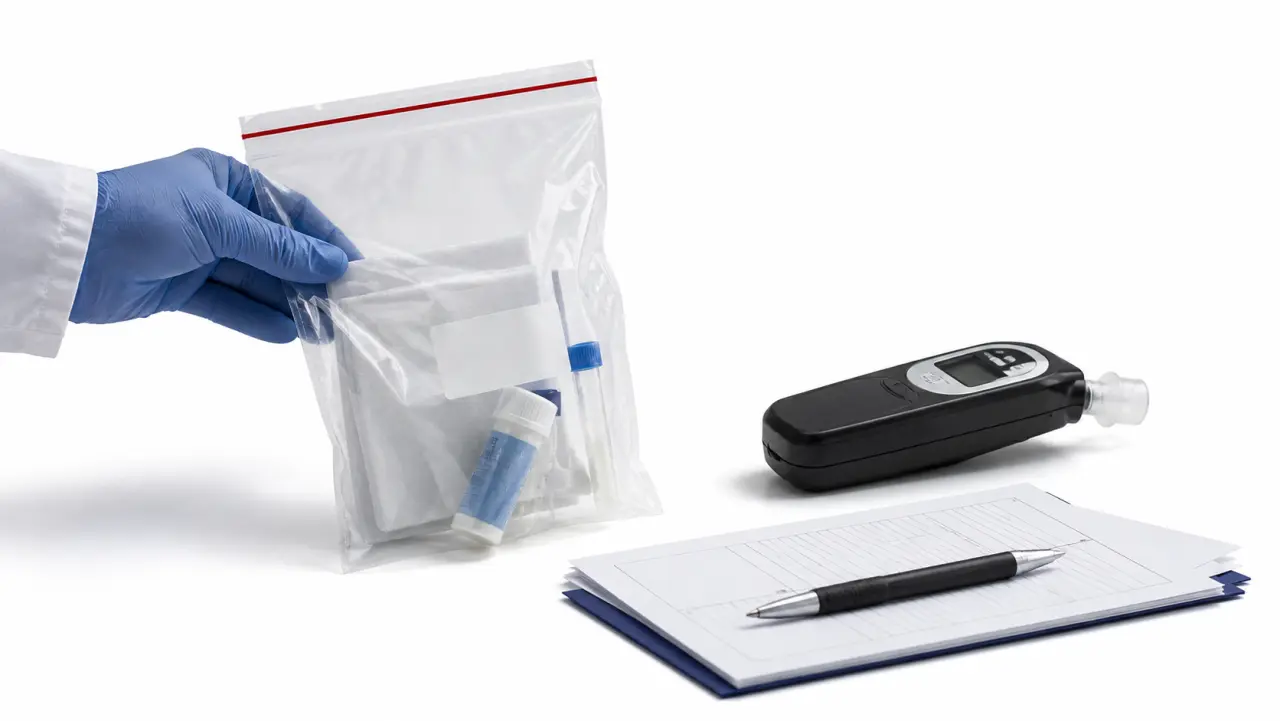
- Pre-employment testing before a driver can be hired
- Random testing throughout the year at rates set annually by FMCSA
- Reasonable-suspicion testing when a supervisor observes signs of impairment
- Post-accident testing required after crashes involving a fatality, citation, or certain injury/tow-away thresholds
- FMCSA Drug and Alcohol Clearinghouse checks — a database carriers must query before hiring or annually to catch prior violations
Prescription and over-the-counter medications that cause drowsiness are also regulated; a driver operating under a medication that impairs alertness can independently support a negligence claim, apart from illegal substances.
Evidence in impairment cases

- Post-accident toxicology and breath/blood test results
- FMCSA Clearinghouse records showing prior violations the carrier should have caught
- Witness statements describing erratic driving, slurred speech, or odor of alcohol
- The driver's qualification file and pre-employment screening records
- Dispatch and hours-of-service logs — impairment often compounds with fatigue
Who is liable?

The driver bears direct responsibility, and a DUI conviction or toxicology-confirmed impairment is powerful evidence in a civil claim — often supporting punitive damages. But the trucking company can also be liable if it:
- Skipped required pre-employment or random testing
- Ignored a positive Clearinghouse record when hiring
- Failed to remove a driver after a reasonable-suspicion observation
- Knowingly scheduled a driver with a known substance abuse history without required follow-up testing
These are among the strongest cases for punitive damages — see what compensation may include and who else can be held liable on our liability page. If you were injured by an impaired commercial driver, get a free case review from a big rig truck accident lawyer today.
Related causes
Sources
- 49 CFR § 392.5 — Alcohol prohibition — Electronic Code of Federal Regulations
- 49 CFR Part 382 — Controlled substances and alcohol use and testing — Electronic Code of Federal Regulations
- FMCSA Drug & Alcohol Clearinghouse — Federal Motor Carrier Safety Administration
- 49 CFR Part 391 — Qualifications of drivers — Electronic Code of Federal Regulations
- Large Truck and Bus Crash Facts — Federal Motor Carrier Safety Administration
- Safety Measurement System — carrier safety records by BASIC — FMCSA Safety Measurement System
Federal regulations and crash statistics are updated periodically. Figures cited on this page reflect the referenced publications at the time of writing; check the source for the current edition.