A No-Zone is one of the four blind spots around a big rig — front, rear, left, and the right side, which is largest and spans more than one lane. A vehicle inside one is invisible to the driver. Liability usually falls on the driver for changing lanes without clearing mirrors, and on the carrier for inadequate No-Zone training.
The Federal Motor Carrier Safety Administration refers to a big rig's blind spots as "No-Zones" — areas along the front, rear, and both sides of the trailer where the driver has little or no visibility of surrounding vehicles. These zones are far larger than a passenger car's blind spots: extending roughly one lane wide along both sides for the length of the trailer, up to 20 feet in front of the cab, and 30 feet behind the trailer.
How No-Zone accidents happen
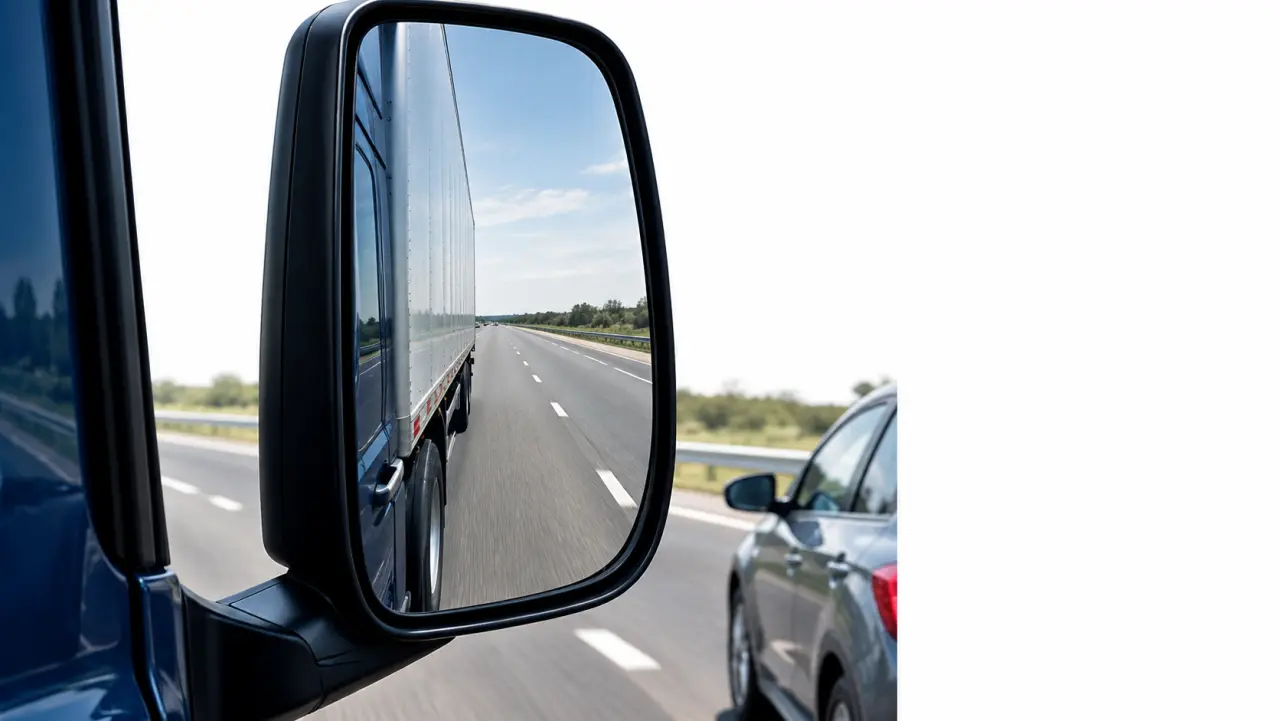
- Right-side lane changes. The right side of a tractor-trailer has the largest blind spot, spanning from the cab door back past the trailer's rear wheels. Drivers changing lanes to the right without adequate mirror checks or spotters frequently sideswipe vehicles they never saw.
- Merging onto highways. A car lingering in a truck's No-Zone while the truck merges is invisible to the driver, even with proper mirror use.
- Backing and rear No-Zone crashes. The area directly behind a trailer is a complete blind spot; backing accidents in truck stops, loading docks, and parking lots are common.
- Front No-Zone braking. Because the driver sits high and the front bumper is well ahead of the cab, a truck can strike a vehicle that cut in closely and then had to brake.
Who is liable?
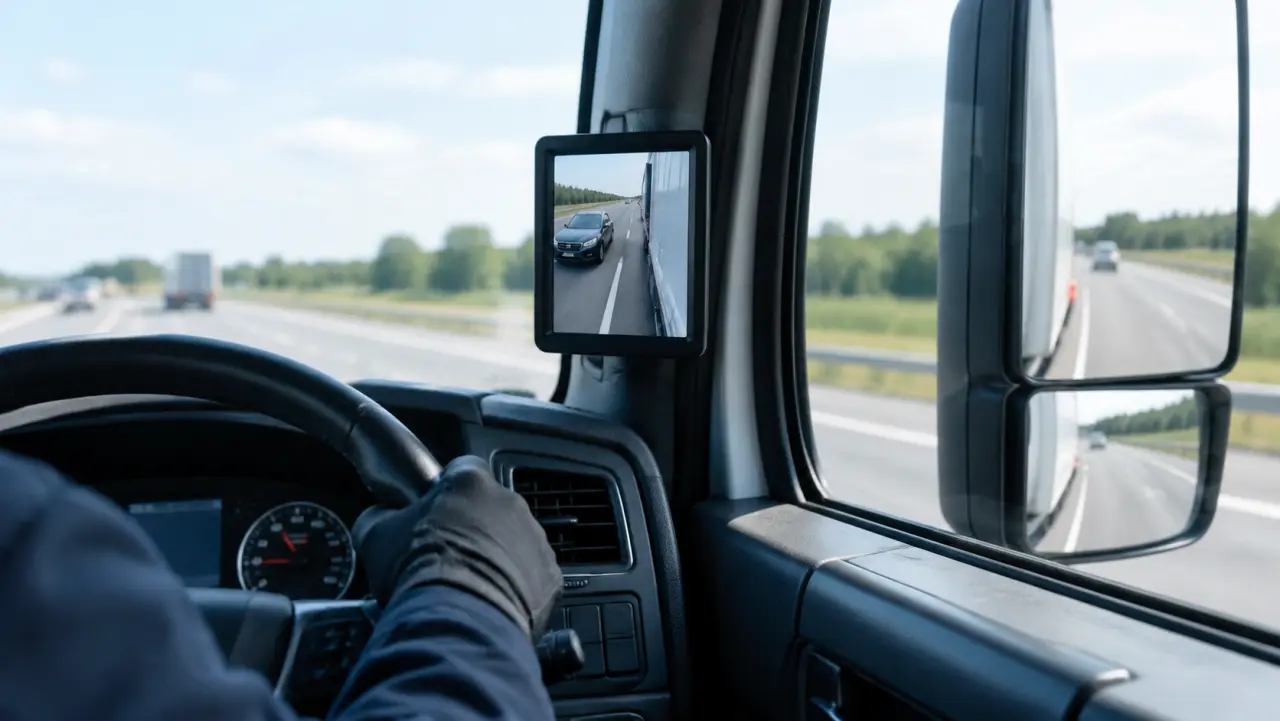
Federal and state law require commercial drivers to receive training on No-Zone awareness, mirror-checking procedure, and signal timing before changing lanes. A blind-spot collision often reflects one or more of the following:
- The driver — failing to check mirrors, signal, or use available spotter/camera systems before merging
- The trucking company — inadequate No-Zone training, or failing to equip trailers with required convex mirrors and, increasingly, side cameras
- A third party — comparative fault can apply if another driver lingered improperly in a No-Zone, but insurers routinely overstate this to shift blame from the truck
Dashcam and trailer-mounted camera footage, if available, is often decisive in these cases and should be requested immediately — footage can be overwritten within days. Learn what to do after a truck accident and who else may share liability, or get a free case review from a big rig truck accident lawyer.
Related causes
Sources
- Our Roads, Our Safety — large truck blind spots (No-Zones) — Federal Motor Carrier Safety Administration
- 49 CFR § 393.80 — Rear-vision mirrors — Electronic Code of Federal Regulations
- 49 CFR Part 391 — Qualifications of drivers — Electronic Code of Federal Regulations
- Large Truck and Bus Crash Facts — Federal Motor Carrier Safety Administration
- Large Trucks — fatality facts and crash research — Insurance Institute for Highway Safety (IIHS)
- Safety Measurement System — carrier safety records by BASIC — FMCSA Safety Measurement System
Federal regulations and crash statistics are updated periodically. Figures cited on this page reflect the referenced publications at the time of writing; check the source for the current edition.