A cargo shift accident happens when an improperly secured or balanced load moves in transit, changing the trailer's center of gravity and causing a rollover, jackknife, or roadway spill. Federal rules set securement standards by cargo type, so a shifted load usually means the shipper, loader, or carrier failed one of them.
Cargo that isn't properly secured, balanced, or rated for the trailer can turn a routine haul into a highway hazard. A shifting load changes a trailer's center of gravity mid-drive, and can trigger a rollover, a jackknife, or send debris — sometimes entire pallets or equipment — spilling across active lanes of traffic.
Federal cargo securement rules
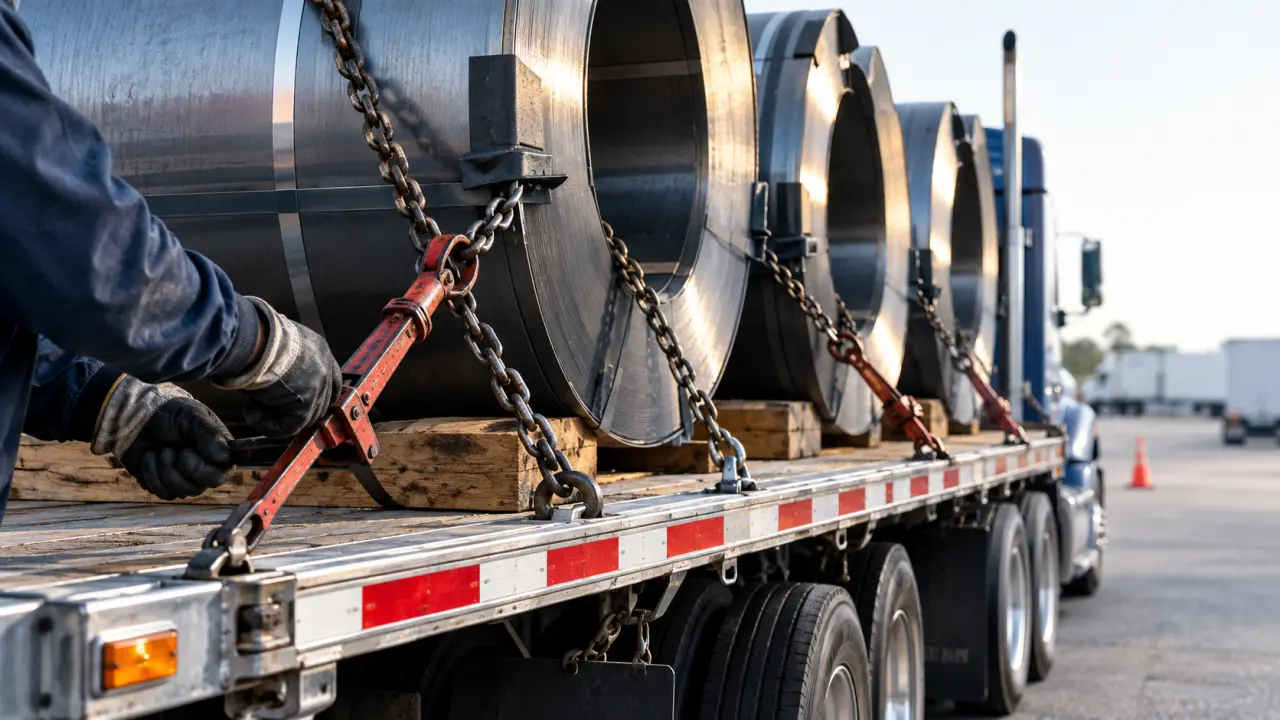
FMCSA cargo securement standards (49 CFR Part 393, Subpart I) require that cargo be:
- Secured against shifting, including sliding and tipping, under normal driving conditions
- Restrained by a sufficient number of tiedowns rated for the cargo's weight
- Distributed so the load doesn't exceed axle weight limits or destabilize handling
- Loaded within the trailer's and truck's rated capacity — overloading is a distinct, separately regulated violation
Drivers are required to inspect cargo securement before departure and periodically during a trip; violations show up in roadside inspection records and driver vehicle inspection reports.
Common cargo-related failures
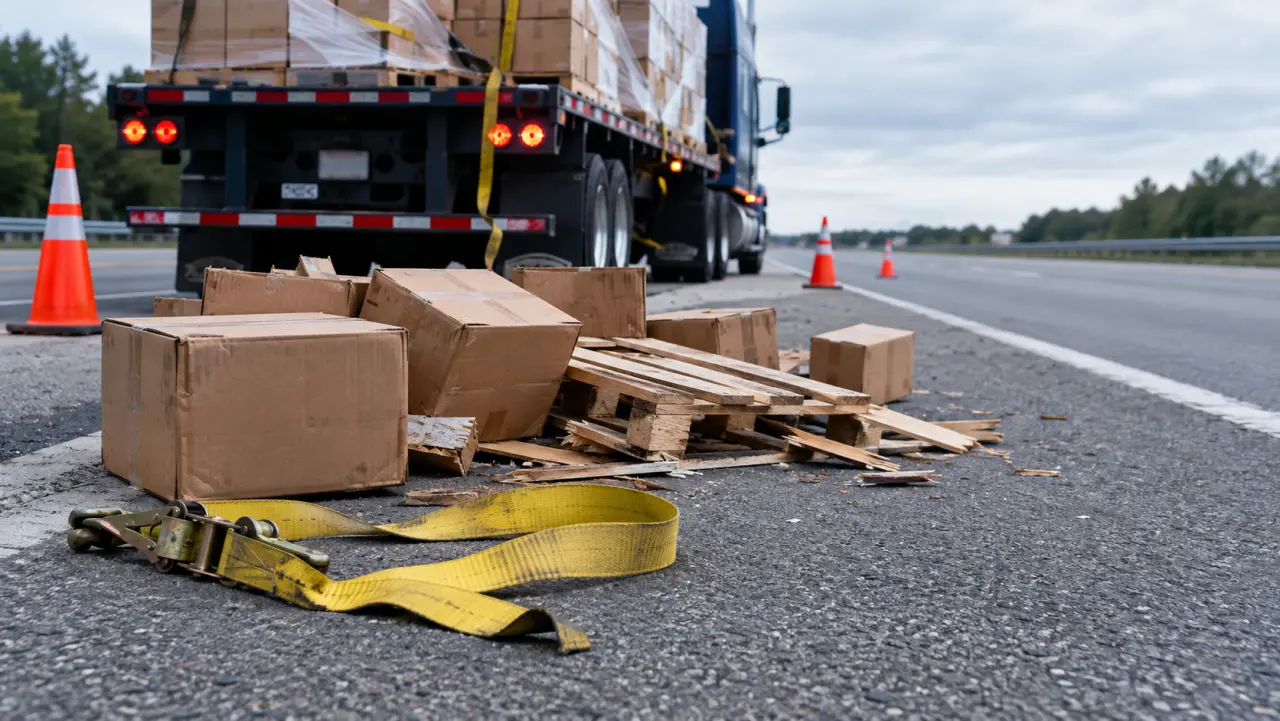
- Insufficient tiedowns for the cargo's weight or shape
- Improper weight distribution — too much weight toward the front or rear axle
- Liquid load surge in tankers not equipped with baffles, or driven too aggressively for a partial load
- Overloading beyond the trailer's or tires' rated capacity
- Loose or falling debris from open trailers or improperly tarped loads
Who can be held liable?
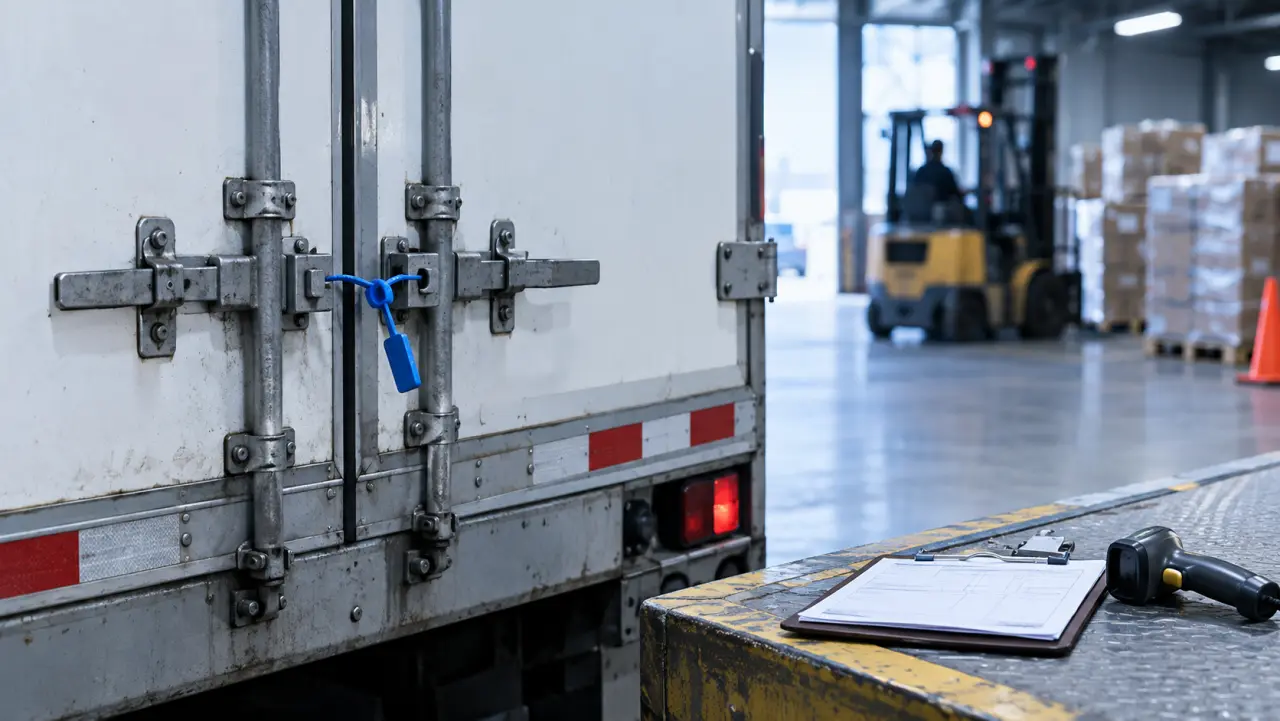
- The cargo shipper or loader — often a separate company from the carrier, directly liable for negligent loading
- The trucking company — responsible for verifying securement before dispatch and en route
- The driver — required to inspect the load and refuse to drive an unsafe trailer
- A third-party logistics or freight brokerage — in some cases, for selecting an unqualified loader
Bills of lading, loading dock records, and weigh-station data help establish who packed and inspected the load. A big rig truck accident lawyer will pull this paper trail alongside the carrier's maintenance and dispatch records — see FMCSA regulations & evidence and who else can be held liable.
Related causes
Sources
- 49 CFR Part 393 Subpart I — Protection against shifting and falling cargo — Electronic Code of Federal Regulations
- Cargo Securement Rules — background and applicability — Federal Motor Carrier Safety Administration
- 49 CFR Part 396 — Inspection, repair, and maintenance — Electronic Code of Federal Regulations
- Large Truck and Bus Crash Facts — Federal Motor Carrier Safety Administration
- Safety Measurement System — carrier safety records by BASIC — FMCSA Safety Measurement System
Federal regulations and crash statistics are updated periodically. Figures cited on this page reflect the referenced publications at the time of writing; check the source for the current edition.